Water planning is strongest when it is not developed in isolation.
The Unified Water Plan was created with that principle in mind. While the initial chapter drafts were developed by technical experts, the plan was never intended to reflect the perspective of one organization, one group of people, one profession, or one water user type. It was designed to be strengthened through broad review, thoughtful feedback, and meaningful participation from across California’s water community.
As each chapter was developed, it was shared with an extensive network. This outreach brought in comments from people and organizations representing a wide range of perspectives, including local and regional water agencies, irrigation districts, groundwater sustainability agencies, engineering and technical consultants, community members, state agencies, environmental and conservation advocates, legal professionals, agriculture representatives, academic experts, policy organizations, and collaborative water programs.
Diverse Feedback
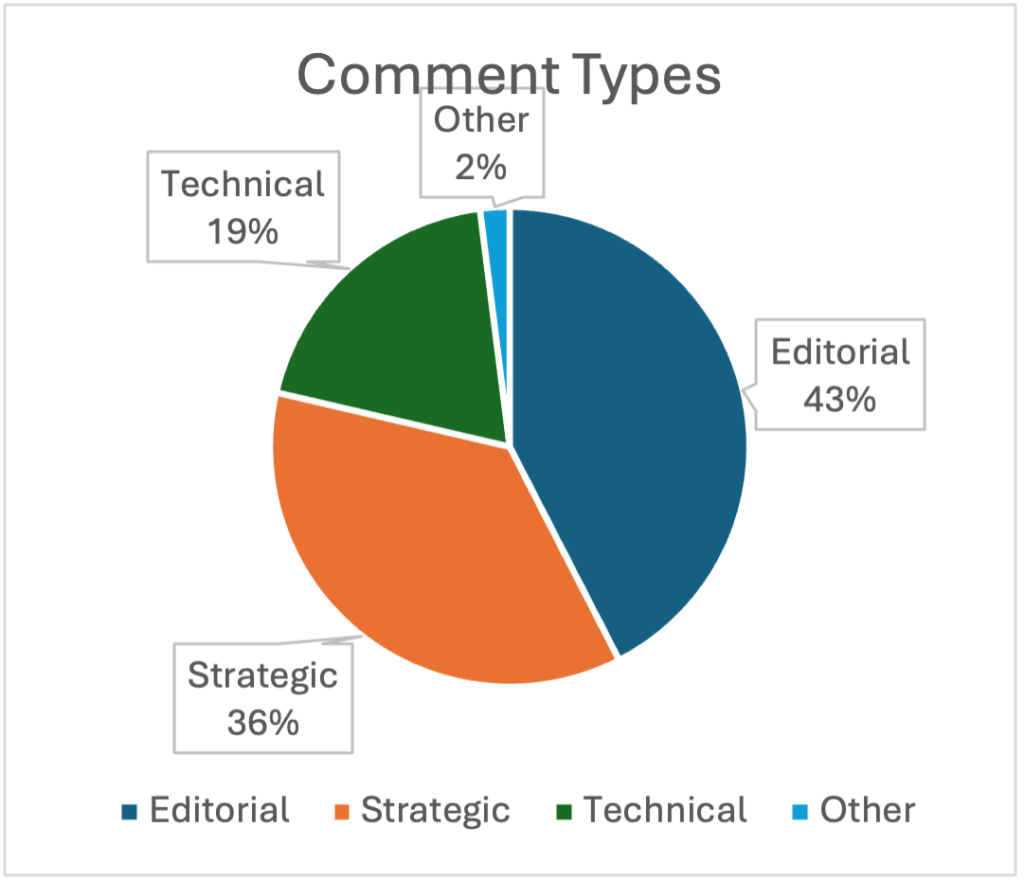
In total, the process received 351 comments. The comments reflected the many ways stakeholders helped improve the plan. Some provided editorial suggestions (about 42%) to improve clarity and readability. Others offered strategic feedback (around 36%) about the plan’s direction, priorities, and framing. Technical reviewers provided comments (about 19% of comments) to strengthen accuracy, feasibility, and practical application. Together, these comments helped move the plan from a technically developed document toward a more complete and inclusive water planning effort.
Just as important as the number of comments was the diversity of participation.
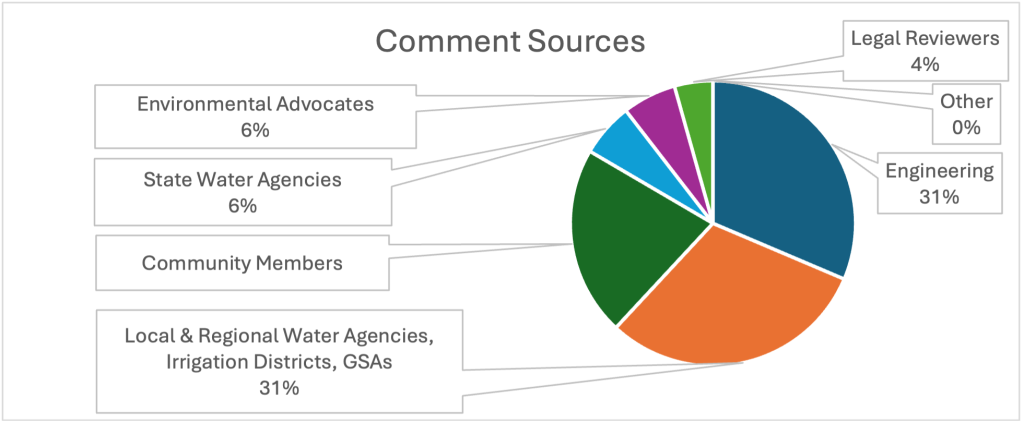
Comments from engineering and technical consultants submitted about 31% of comments. Local and regional water agencies, irrigation districts, and groundwater sustainability agencies provided about 30 percent of comments received. Community members contributed about 21 percent of all feedback received. State water agencies and environmental or conservation advocates each contributed about 6 percent each. Legal reviewers provided 15 comments, and additional input came from agriculture, academic, policy, and collaborative water interests.
This diverse range/breadth of participation matters.
California’s water challenges are complex because they affect people, communities, ecosystems, farms, cities, industries, and future generations in different ways.
No single perspective can fully define the problem, and no single organization can develop durable solutions alone. A plan that seeks to address water resilience must be informed by the people who manage water systems, depend on water reliability, protect natural resources, serve communities, interpret policy, and understand conditions on the ground.
A Shared Conversation
The stakeholder engagement process helped ensure that the Unified Water Plan was not simply a technical document. It became a shared conversation.
The feedback received helped clarify language, test assumptions, identify gaps, refine strategies, and improve the usefulness of the plan for different audiences. It also demonstrated that people across the water community are willing to engage constructively when given the opportunity to review, respond, and contribute.
That kind of engagement is essential. Water planning requires trust, and trust is built when people can see that their voices were invited, their comments were reviewed, and their perspectives helped shape the final product.
Stronger Together
The Unified Water Plan reflects a collaborative approach to water problem-solving. It recognizes that California’s water future cannot be advanced by one sector alone. It will require technical expertise, local knowledge, community insight, environmental awareness, agricultural experience, policy understanding, and continued coordination across institutions.
The stakeholder comments strengthened the plan because they brought these perspectives together.
The result is a planning effort that is broader, more thoughtful, and more grounded in the realities of California water management. It is not the plan of one organization, one group, or one water user type. It is a plan shaped by many voices and strengthened by the shared commitment to finding practical, inclusive, and lasting water solutions.
Stay tuned for the next release of the plan!!